


Disability project law “for full employment”: improving access to employment for people with disabilities
Octobre 7, 2023 — published by Pyramidale Communication
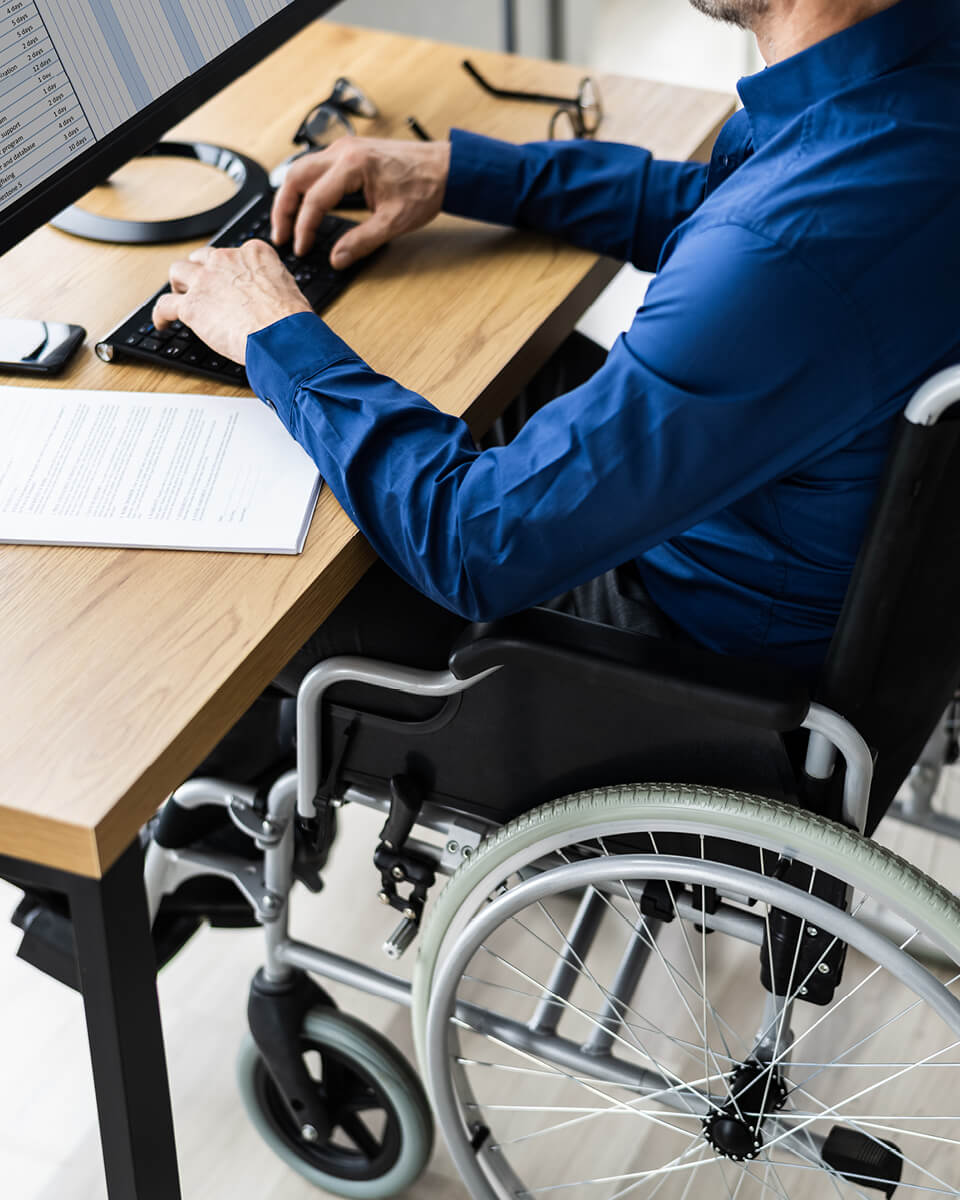
In the context of chronic or rare diseases, being employed or seeking employment raises many challenges, and maintaining a professional life can be particularly difficult. Fatigue, pain, absenteeism, unsuitable working conditions, and, in some cases, inability to work are among the difficulties encountered. Depending on individual circumstances, measures and support schemes are now available to address these needs and help better reconcile chronic or rare diseases with work. Nevertheless, many adjustments are still required to ensure the effective implementation of this full-employment policy.4,5
Why this project law on disability?
Contributions from the senate
The creation of a “digital backpack”: 1,2,6,7
As part of the National Disability Conference (CNH) held on April 26, 2023, the creation of a personal digital file for each person with a disability was announced.
This “digital backpack” records all accommodations granted to a disabled worker throughout its life (education, training, apprenticeship, and employment). Its purpose is to facilitate mobility and the implementation of new accommodations when entering training or starting a new job. The aim is to prevent gaps in accommodations and to make their setup easier, so that they can be implemented more quickly when the person enters training or employment.
RQTH equivalence for young people aged 16 to 20: 1,2,6,8,9
These young people must receive a child disability compensation benefit, a disabled child allowance, or have a personalized schooling plan, ensuring an effective transition until the opening of adult rights for persons with disabilities, set at age 20.
What happens next?
The impact of illness on daily life extends far beyond health alone. Improving quality of life and autonomy means being able to access and maintain employment, actively participate in social life, and manage everyday activities with greater ease.11
- Sénat – Textes législatifs : https://www.senat.fr/travaux-parlementaires/textes-legislatifs/la-loi-en-clair/projet-de-loi-pour-le-plein-emploi.html
- Assemblée nationale – Documents parlementaires : https://www.assemblee-nationale.fr/dyn/16/textes/l16b1528_projet-loi
- Handicap.fr : https://informations.handicap.fr/a-senat-adopte-projet-loi-pour-plein-emploi-35243.php
- Agefiph : https://www.agefiph.fr/actualites-handicap/marche-de-lemploi-des-personnes-handicapees-en-2022-baisse-du-taux-de-chomage
- Agefiph – Tableau de bord 2022 emploi et chômage : https://www.agefiph.fr/sites/default/files/medias/fichiers/2023-07/Agefiph_TB-national-emploi-chomage_2022.pdf
- Sénat – Consultation des amendements : https://www.senat.fr/amendements/2022-2023/802/liste_adoptes_ordre_discussion.html
- Sénat – Amendement N° 609 rect. : https://www.senat.fr/amendements/2022-2023/802/Amdt_609.html
- Sénat – Amendement N° 602 : https://www.senat.fr/amendements/2022-2023/802/Amdt_602.html
- Handicap.Gouv : https://handicap.gouv.fr/de-nouvelles-mesures-de-simplification-pour-fluidifier-le-parcours-des-personnes-en-situation-de
- Assemblée nationale – Liste des dossiers législatifs : https://www.assemblee-nationale.fr/dyn/16/dossiers/DLR5L16N48163
- CESE – Conseil économique social et environnemental : https://www.lecese.fr/travaux-publies/les-maladies-chroniques
Contact us today to discuss how we can help you stand out in medical communications.

ARTICLE WRITTEN BY PYRAMIDALE COMMUNICATION
A Tech Health agency